About me Genoa, Italy
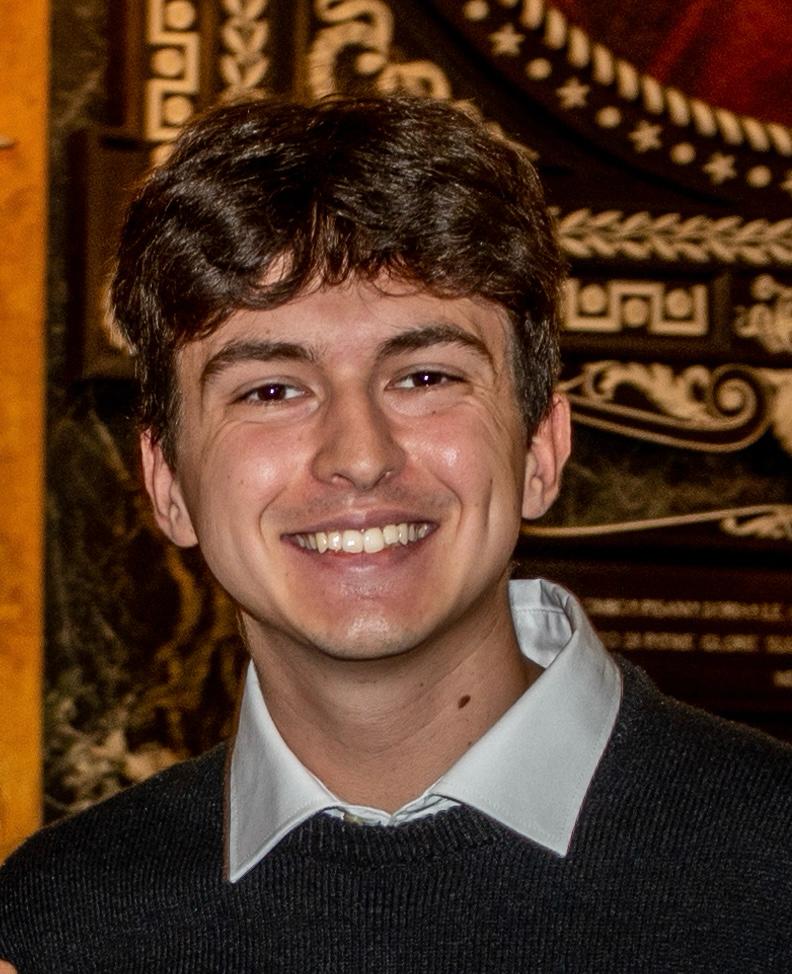
Marco Fasoli
MSc Computer Science @ University of Genoa
Hi, there!
I'm a master's student in Computer Science at the University of Genoa, enrolled in the Artificial Intelligence degree. I am also an Orthogonal student at Scuola Ortogonale.
I am interested in working on interpretability and machine unlearning on large language models.
Currently working on the AIMO interpretability challenge and the analysis of linear probes in different parts of the model.
From the notebook
Articles
Short notes on experiments, prototypes, and what I learn along the way.
Teaching a Random Forest to resist color shortcuts during training
A walkthrough from diagnosing color bias in Random Forests to testing an interpretability-guided intervention during tree growth.
Can an internal feature make Gemma more Italian?
The same question, a different Gemma: an Italian artist, dinner that must be pasta, and a suspiciously sauce-related origin story. A small experiment in SAE-based activation steering.
Education
MSc in Computer Science, University of Genoa
Relevant coursework: Machine Learning, Deep Learning, NLP, Computer Vision.
Scuola Ortogonale, Fondazione ELICSIR
The program brings together students in Computer Science, Computer Engineering, and closely related fields at Italian public universities. It combines personalized mentoring, scientific seminars, and annual team projects, with a focus on independent research, critical reading, technical writing, and communicating scientific ideas.
BSc in Computer Science, University of Genoa
Grade 110/110 cum Laude
Relevant coursework: Algorithms, Probability, Calculus, Linear Algebra.
Contaminazioni Ortogonali, Fondazione ELICSIR
Access to selected Scuola Ortogonale activities and other Fondazione ELICSIR initiatives, alongside my bachelor's degree.
Talks
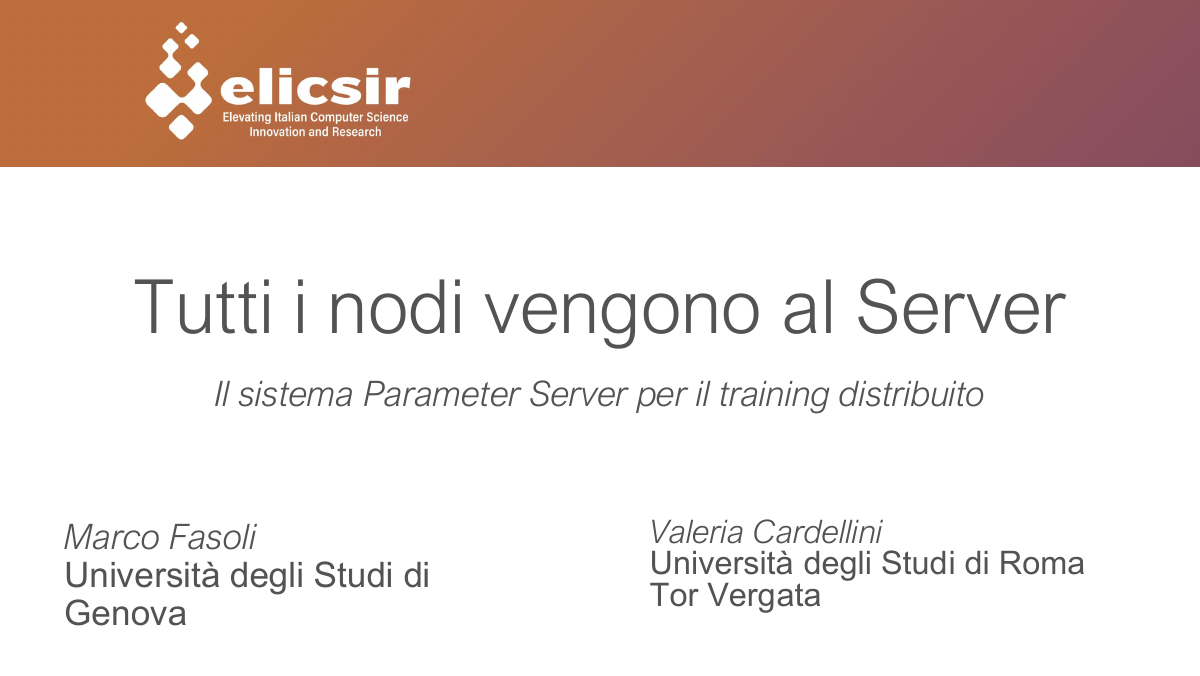
Tutti i nodi vengono al server, Distributed Machine Learning
A 30-minute introduction to distributed machine learning, focusing on the parameter server architecture and its trade-offs.
Projects
White-box interpretability methods to understand how large language models make predictions.
Read more
I am exploring white-box interpretability methods to understand how large language models arrive at their predictions.
Painter Identification from Medieval Letter Crops
Comparing classical descriptors with SVM and Random Forest classifiers against learned ResNet representations for medieval painter identification.
Read more
I am comparing two approaches to identifying the painters of medieval manuscripts from cropped letters: classical visual descriptors paired with classifiers such as support vector machines (SVMs) and random forests, and learned representations from ResNet-50. The comparison examines predictive performance and interpretability, alongside how individual letters contribute to painter identification and the trade-off between their frequency and discriminative power. Grad-CAM visualizations help inspect the image regions contributing to the ResNet predictions. The work includes a collaboration with a humanities PhD researcher in France.
This research is ongoing and may lead to a publication. The source code and related research materials remain private while the work is in progress. Access may be granted on request; please describe your interest and intended use.
Two approaches to playing Hive: Monte Carlo tree search with a graph attention network, and minimax with NNUE evaluation.
Read more
With my teammates, I developed a game engine and AI for the board game Hive. My main contribution was the AI: Monte Carlo tree search guided by a graph attention network trained through self-play reinforcement learning. We also implemented a second approach using minimax search with an efficiently updatable neural network (NNUE) to evaluate game states.
The source code for both versions is private at the request of Hive tournament players, to help prevent its use for cheating in competitive games. Access to the code and related materials is available on request; please mention which version you are interested in and how you plan to use it.
A survey of distributed LLM training, covering parallelism strategies, memory constraints, and communication costs.
Read more
Written under the supervision of Prof. Valeria Cardellini, this survey reviews distributed training architectures, including parameter servers, all-reduce, and gossip learning. It covers data, model, and pipeline parallelism, then examines the challenges of training large language models, including communication overhead, memory constraints, and fault tolerance.
Steering Gemma 2 and 3 toward Italian culture using GemmaScope 1 and 2.
Read more
Inspired by Anthropic's Golden Gate Claude experiment, I used sparse autoencoder features from Gemma Scope to steer Gemma 2 2B IT and Gemma 3 1B IT toward Italian cultural associations. Adding selected feature directions to the models' internal activations sometimes brought Italian references into otherwise ordinary answers. I also explored the limits of this approach: stronger steering could produce fabricated claims or repetitive text.
Investigating how Random Forests learn spurious color correlations in the CMNIST dataset.
Read more
I studied how random forests learn spurious color correlations in Colored MNIST (CMNIST). I compared models trained on raw pixels and neural network features, alongside balanced-data and grayscale baselines. Feature-importance maps and Gini impurity analyses helped investigate the models' reliance on color shortcuts. A follow-up article explores an intervention that uses color-dependence diagnostics to guide tree growth.
Comparing thresholding, watershed segmentation, and Canny-based segmentation to isolate malaria parasites in cell images.
Read more
I compared three methods for isolating malaria parasites within infected cell images: color-based thresholding, watershed segmentation, and segmentation based on Canny edge detection. After contrast enhancement, I evaluated the resulting masks using the segmented-area ratio, a color accuracy index, and mean hue deviation. Visual comparisons helped assess each method's strengths and limitations on this dataset.
Events
Bologna Summer School BOOST '26
Attended talks on Machine Learning by Kilian Weinberger, Adversarial AI by Battista Biggio and Point Lattices and Post-Quantum Cryptography by Daniele Micciancio.
Oropa Summer School BOOST '26
Attended talks on Blockchain by Ittay Eyal, Compilers by Adrian Sampson and Deep Learning Optimization by Antonio Orvieto.
Computer Science Workshop
Attended talks on Deep Learning by Emanuele Rodolà, Human-Robot Interaction by Alessandra Sciutti and a bunch of PhD posters.
5x Orthogonal Weekends 2025-2026
Participated in Scuola Ortogonale's weekend seminars and collaborative work on the annual team project. Gave a talk on Distributed Machine Learning during one of the meetings.
Bologna Summer School BOOST '25
Attended talks on Multi-threaded Programming by Matteo Frigo, Decision-Making with Partial Information by Flavio Chierichetti and Cybersecurity by Fred Schneider.
Oropa Summer School BOOST '25
Attended talks on Formal Verification by Manos Kapritsos, Multi-Armed Bandit Algorithms by Bobby Kleinberg and Algorithms for Learning with Distribution Shift by Adam Klivans.
4x Orthogonal Weekends 2024-2025
Attended Computer Science seminars during the Orthogonal Weekends through the Contaminazioni Ortogonali program.
General Information
Honors and Awards
Scuola Ortogonale Scholarship
Selected among 20 students for a two-year scholarship supporting participation in Scuola Ortogonale alongside a master's degree. The program brings together students in Computer Science, Computer Engineering, and closely related fields at Italian public universities.
Pretto Cassanello Scholarship
Awarded to 1 graduate student in Computer Science at the University of Genoa, based on academic merit and financial need.
2x Department merit award
Awarded to the top 1 percentile (~100 students) of graduate students in Computer Science.
Contaminazioni Ortogonali Scholarship
Selected among 20 students for a one-year scholarship supporting participation in selected Scuola Ortogonale activities and other Fondazione ELICSIR initiatives alongside a bachelor's degree. The program brings together students entering the third year of a STEM degree at Italian public universities who have an interest in Computer Science.
Pretto Cassanello Scholarship
Awarded to 1 undergraduate student in Computer Science at the University of Genoa, based on academic merit and financial need.
2x Department merit award
Awarded to the top 1 percentile (~250 students) of undergraduate students in Computer Science.